Monday, January 1, 2018

Creativity inLeukemia

I think that there is value in bringing the maximum information to bear in every case. One  must be careful in the application of the ideas that emerge

I recently saw  a 50 year old woman. She was very Northwest.  Atheletic, her profession was environmental preservation.  I could feel that she had a life that was filled with love , the outdoors, living an ethical and healthy life.  She had an annual blood test, a Complete Blood Count (CBC).   In modern machines, the concentration of various white blood cells  is reported.  This patient had an excess of lymphocytes.

Lymphocytes make me wince.  The word denotes a cell, present in the blood, with a single,nonsegmented, mature appearing nucleus.  T-cells, B cells, natural killer cells, are all classes of cells with this appearance.  In addition T cells and B cells come in at least 300,000 varieties, defined by DNA rearrangements that determine their targets.  This array of distinct cells and classes of cells is lumped together and called lymphocytes.

The most common disease caused by a abnormal proliferation of "lymphocytes" is B cell CLL.  B cells, under the appropriate conditions, become factories for the production of antibodies. Leukemic cells do not progress, they are abnormal. CLL  B cells have T cell markers  that identify them as abnormal. 

In my patient, the typical abnormal pattern for chronic lymphocytic leukemia was  identified. An  elevation of CD38 was also identified. Increased CD38  is associated with a poorer prognosis in CLL.  It predicts for more extensive nodal disease and earlier progression from the time of diagnosis.

But sometimes negative prognostic factors are targets for new  therapies; and the new therapies  turn the negative into a positive. A drug  called  Daratumumab was  recently  approved by the FDA for  multiple myeloma ,a disease that is distantly related to CLL,  It is directed against CD 38. Multiple myeloma is a malignancy of plasma cells.  Plasma cells are the antibody producing cells that the B  lymphocytes mature into, after they are stimulated. Plasma cells have CD38. Daratumumab has not been approved for chronic lymphocytic leukemia.  Research into the use of this drug  is just beginning for chronic lymphocytic leukemia. 

In order to characterize the patient's disease further,  we had sent an analysis of the Chromosomal changes that are often seen in chronic lymphocytic leukemia. This test brought another result that needed  explanation. Her CLL was missing one copy of the ATM gene.  This is another negative prognostic marker.  But a closer look might turn the situation.

ATM is one of several genes that are involved in DNA repair.  A class of drugs, including some that are FDA approved, makes the mutation  in ATM  into an Achilles heel.  The drug turns this defect in DNA repair ( which probably contributed to the malignant process by increasing mutations) into a lethal problem for the cells that carry it.  Drugs that target DNA repair defects are approved for breast and ovarian cancer, not for  CLL or other cancers .  However, a clinical trial in prostate cancer  showed that a  drug in this class prolonged survival along a spectrum of DNA repair defects, including ATM.  Studies have begun to investigate  the utility of this approach in CLL and related diseases.

The relevance of all this biology is not clear because the  treatment of CLL, regardless of negative prognostic factors, has improved so much... and it continues to improve.  In  the past year , the FDA has approved ibrutinib  (response rate 85%), venetoclax ( response rate 84%, complete response rate 50%)  and idelalisib (resposne rate 50 % CR 15%) .  These drugs target  enzymes that are common to (almost) all CLL cells.  They are  approved because they are known to be tolerable and effective

On the horizon, CART cells are now being tested for refractory cases.  These are genetically modified immune cells directed at a chemical that is on the surface of the malignant ( and some normal) cells.  This technique, newly approved for acute leukemia, has had dramatic success.

There is value in bringing our expanded understanding of disease and the wider range of treatment options to bear on every case. The  safest and best  outcome for the patient must always be the top priority. It is important to avoid seduction by your own thoughts. "Don't let the sound of your own wheels drive you crazy" ( The Eagles)


The diagnosis cloud

Data Clouds

I've looked at clouds from both sides now
From up and down and still somehow
It's cloud's illusions I recall
I really don't know clouds at all
Judy Collins


All real world, "scientific" information comes as a cloud.There is a penumbra of uncertainty that surrounds every "fact"  Even physical constants, like the  universal gravitational constant, G,  are never quite exact because of measurement issues.  Data in medicine is usually very inexact.  Accumulation of large samples is the standard method for improving the resolutions; but more data always leads to more cloud.  The kernel of truth is always shrouded, the veils  are too thick.  The truth is imagined be a point of light, encased in translucent noise,  A more sophisticated ( but, perhaps no more correct) view is that the truth, itself is a cloud.  Perhaps the Heisenberg Uncertainty Principle  ( there is an absolute limit to the accuracy of a measurement) also applies to  medicine


 Treatment depends upon definition.  The definition of  diseases has a significant  traditional component.  The diseases of the Bible, Hippocrates and Galen are now understood  to be mixtures of entities.  The signs and symptoms that these extraordinary ancient observers  could identify come from a variety of very different processes.   To them, jaundice was a disease entity.  We understand that jaundice, yellow discoloration of the skin and eyes, can be the result of liver disease, diseases of the red blood cells, gallstones, etc.  We can identify these differences using biochemical  blood tests, the microscope and CT scans.

 As I say this, I am reminded of a Saturday Night Live skit from the 1970's,  Theodoric of York, Medieval Barber. In that clip, the medieval medical practitioner reassures the patient's mother by talking about how medical science had progressed from ideas of demonic possession to understanding that disease is caused by imbalance of humors.brought on by toads  How ridiculous will our models look in 50 years? 


The models of disease  that emerged in the nineteenth century, with  the application of the microscope  and the use of dissection emphasized a cellular basis of disease.  The discovery of pathogenic bacteria led to a simple model of infection that continues to be the basis of the greatest of medical interventions.  In the current era, most diseases  are still viewed  through the lens of the light microscope.  The incorporation of molecular and interactive (immune)  information has lagged.
It is hard to improve upon success. But we, who care for the sick, understand the challenge; we see how limited is this success. 

Current imaging, blood tests, and microscopic techniques give us a working understanding of the varieties of disease processes.  It has led to real advances. The main block to further success has been the  limited treatment options.  The improved vision afforded by molecular and immune systems techniques will give us a better understanding  of the disease process and  lead to improved outcomes.  These are radar that will penetrate some of the clouds. 

Sunday, August 13, 2017

Too many drugs? Too few patients?


The article by Gina Kolata in the New York Times ( August 13, 2017) is written from  a perspective that favors drug companies over the patients.    

The current system of clinical trials  started when the average American lifespan was less than 70 years for men, before we knew anything about the molecular basis of cancer, and the slide rule was the most sophisticated, widely available, computational tool. It has always been clear that this system slowed drug availability and, consequently, led to deaths.  

From the patient's (and the caring provider's) perspective anything that improves the chance of more effective therapy is welcome. "Too many drugs" is when there are adequate treatments for all diseases.  "Too few patients " is universal wellness...at reasonable cost. 

The article quotes two Genetech executives (see same day NYT page 7 for the ad for an unrelated Genentech product)  questioning how many immunotherapeutic  agents can be tested.  Genentech's entry in this field,  TECENTRIQ®,,is having trouble proving its worth .  The company  may want to beat its competitors.  The irony of a Merck vice president saying: "How many  PD-1 antibodies does Planet earth need? " is not lost on me.  He might well think that the Merck product, Keytruda, is enough. We do not know that .

The idea of "outstrip[ping] our progress in understanding the basic underlying science"  is incredibly arrogant.  Most of our currently effective  cancer treatments  were developed in the context of models that have been long abandoned.   Our current understanding of immunology and  gene interactions remains primitive and will almost certainly be changed in the future.   Part of refining the model  will depend on the results of treatment with these medicines.  That is the history of medicine. 

In the article the "cost" of genetic testing is quoted at $5000. I find that interesting .  The cost depends on who is paying.  Currently, the materials cost is less than $100.  The amount billed to the insurance company is often about $8500.  If the patient pays directly, it is no more than $3500.

From the  cancer  victim's perspective, the problem is not too many drugs.  The  problem is  the cancer.  The drug companies, the  FDA  and insurance companies are standing between patients and their treatment.  The system needs to change.   

Friday, June 16, 2017

An  applications for computers in medicine

I think about what I do as a physician and a specialist in hematology and oncology,  and how it could be made automatic. If it we're automatic, it would be done more uniformly and rigorously and the calculations would be more reliable.

I believe that machines can do many  things better than I can. Their memories are  perfect,.  Their calculations are exact.

I also believe that, at least at this point, I can add something to the machine. I can be more skeptical. I can understand the motivations of the people who create the input. I can understand the implications of suffering, the feelings of relief and loss.

I look forward to a collaboration with the machine. I do my best to foster it. I have brought the internet to clinical conferences for the last 30 years. Do not forget the sounds of the telephone modem connection in the 1980's.

I would like to see an expanded role for computers in medical decisions. .The  Electronic Medical Record was supposed to help with this integration. It has done a very poor and limited job. Sometimes, it has stood in the way of using the capabilities of computers to help analyze and solve problems. It is very difficult to export  data to a spreadsheet for analysis. This will undoubtedly get better. But the structure of incompatibility among electronic medical records is a violation of one of the main motives of the government that encouraged,  with sizable economic incentives,  their adoption.

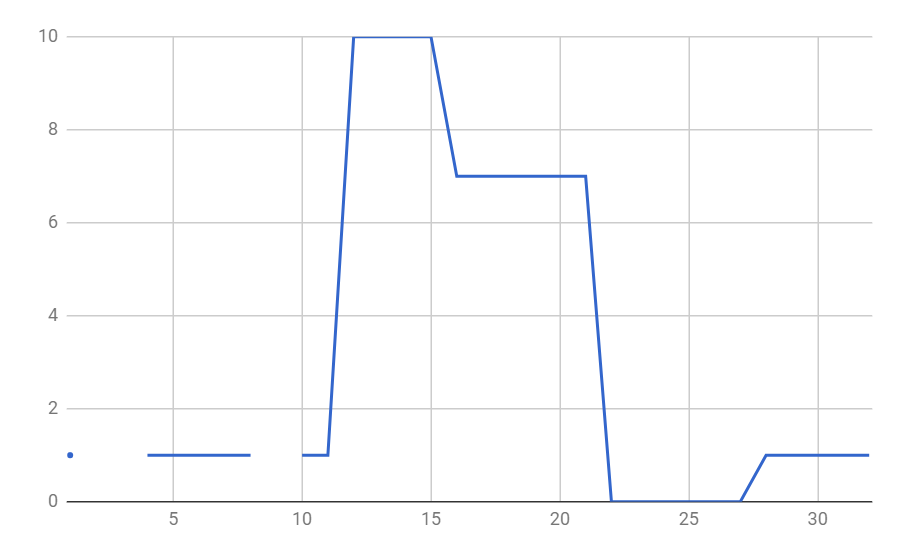
In my hematology practice, I am often confronted with the question of the cause and treatment of low blood counts. I have found an analysis of the time course of the fall of such blood counts is useful. Often, a point in time can be identified when the fall began. A pattern can be seen suggesting either a slow, gradual fall or a rapid fall or both phenomena superimposed upon one another. Although these consultations are a welcome source of income for me, I recognize that the algorithm that I use could be made  automatic.  Such an automatic algorithm would help me do this work. Currently, an automatic solution would need to be checked by a human health care provider. Over time, the level of training of that provider might not require subspecialty certification. The primary care provider could do an adequate job of spotting unusual circumstances

I would like to see the machine identify the time course of variations in laboratory tests and then, automatically, correlate these with variations in treatment. This is not a hard algorithm. Thinking about it was somewhat entertaining. I would do it by going back to the definition of the derivative. One would then look at the slopes of the segments that make up the overall change and identify the more dramatic slopes as times of dramatic change to be correlated with alterations that might be identified in the history, especially medication changes. ( After doing the calculations, I realized that this was probably  the beginning of Newton’s method of difference,  the origin of calculus that I had recently read about in James Gleick’s biography of Isaac Newton.)  

This approach could also be used to monitor whether interventions are effective. Improvements could be correlated with interventions directed at those parameters.

Such an algorithm does not replace the human It simply helps her. I think we need it.

Model curve

"derivative" curve identifying days of greater and lesser change

Sunday, January 29, 2017

Understanding and Practice:

Understanding and Practice:

How deeply do I understand the bases for my medical decisions? What constitutes practical understanding?

I practice a high stakes type of medicine: hematology and oncology.  My patients have life threatening diseases.   Patients expect a highly educated, highly informed opinion about how to proceed.  They believe  that I understand the medical research  that forms the basis of the treatment plans.  What does it mean: "to understand"?

Understand is a word that consists of two components:  under and stand, both easily  comprehended English words. I can imagine this combination  of words to mean having a relationship with the subject that  does  not crush me, I can stand under the image and look at it objectively and agree.  I can bring supporting ideas to bear on the issue, see the basis of the conclusion. 

To understand disease and treatment  has a variety of its own  meanings.  There is a  quantitative aspect to understanding, it can be broad or narrow, superficial or deep. Using these terms to describe understanding reflects its architectural nature.  Understanding is a structure.  If it claims to be  tall its foundation must be very deep, it can easily topple,  a  poorly supported claim of understanding is a very insecure structure.

Within medicine, within oncology, understanding means different things. Evaluating microscopic images requires a set of cognitive skills that is quite different from evaluating the statistics of clinical trials outcome data.  The  interpretation of large data sets that describe  outcomes is  very separate from that molecular biology that describes the mechanisms of disease and recovery. Once  a particular type of interpretation is relegated to an expert, without review by the deciding physician, it become religious scientism, faith in a vaguely understood process, believed on the basis of a report there is an unrecognized underpinning of pure faith.   It is the intelligent  integration of the various facets of information that constitutes understanding.  Understanding requires skepticism and self criticism.

The practice of medicine requires sufficient understanding to know when to use a given therapy and when  not to.  It implies a knowledge of how to administer the treatment and how to deal with its consequences.  Unfortunately, in our rapidly changing world, depth has become optional.

Often, the understanding is quite superficial.  It consists of  recognizing a  pattern that identifies a disease, reviewing sets of  guidelines or  published recommendations;  deciding  among the various alternatives; beginning   treatment; and dealing with consequences.  This pattern of behavior  is not simple and requires a high degree of education and intelligence.  But it  is not what I call understanding. 

In our era,we have come to question the  value of deeper understanding . The big data approach suggest that the  analysis of a large enough data set  will yield a better set of predictions  than a model  of disease and treatment based,  theoretical "understanding" of (an imagined)  underlying mechanism. There is undoubtedly a role for this kind of agnostic knowledge.  But, an approach that denies any level of mechanistic  understanding may fail to   identify  the heterogeneity of the data set and  obscure important information. In the large dataset we are often naming a number of diverse  entities the same diagnosis.  We now recognize some of these differences and separate the abnormalities that will reliably respond to  their special treatments, but this process of differentiating molecular diagnoses is in its infancy.  It is only begining to penetrate clinical trials.

 What we currently call a diagnosis usually does not correspond to a single molecular entity.  A  diagnosis  today is  a combination of a clinical history, physical and radilogic findings, a particular microscopic appearance with certain stains,  an aberrant  collection of  surface molecules, and/or a  set of mutations  in critical genes. Whe the diagnostic lable is attached , there is often no recognition of the methods used to arrive at the diagnosis. Sometimes one set of methods is applied, sometimes another

The important,  practical goal  is the  identification of a  distinguishing mark that directs therapy, the piece of information that will lead to cure.   Finding that is something I can support.  When I have that piece of information, in a practical sense,  I understand.

Sunday, December 11, 2016


Computer Aided Oncology Conference


Every week I go to a few conferences in which cancer cases are discussed.  Oncology, the branch of medicine that treats cancer, is a very active area.  Developments are reported daily.  The rate of clinically important discovery is accelerating.  

I have a good memory, evidenced by my performance in medical school  and  National Boards exams.   But my computer remembers much better than I can.  It never forgets anything. My computer can access the world's medical literature in seconds.  It can translate papers from Chinese.  It can give me the most recently updated recommendations from the NCCN, or the BC Cancer Agency, or the UpToDate  online textbook instantly.  That is why I come to conference armed with my computer linked into the internet.   

 The continuous improvement in computer intellectual power is demonstrated by their relentless ascendancy in high level games.  Chess, Jeopardy and Go are contests in which  complex decision processes are tested and demonstrated.   In 1997, Garry Kasparov lost the world chess champion to a computer,  IBM’s Deep Blue.   It was predictable that the machine would, eventually, win.  IBM's Watson became the greatest of Jeopardy champions. Google’s AlphaGo  is sweeping the Go world.  All of these games, whose masters have extraordinary talents and abilities, are yielding to the machine.  The machine has qualities that no human will ever be able to match... unassisted. 

The machine never forgets. The machine can search its memory, most of the world's knowledge, with lightning rapidity.  It can carry out algorithms at near light speed. The puny, slow moving human memory is no match. 

But humans have qualities that the machine cannot (yet) replicate.  The human has sensitivities, shared in a multifaceted and spectral way, with other humans.  There are ways in which we understand each other that a silicon processor cannot.  It could, possibly, be programmed to mimic the human responses to emotion, but it cannot feel empathy. 
When I bring my computer to conference, I add to the machine.  I tell it what to look up.  I define the search parameters.  Having done this for more than 25 years, I can do it rapidly and well.  It is an art that incorporates a level of speculation about how biological processes might be related.  It also involves a (reasonable) expectation that someone else has had the same question and it has been written about.  
I then decide which articles are truly relevant and estimate the validity of the information.  Even a human brain can do all this in less than two minutes.  I think it works out well.  That is why I continue to do it and encourage others to try it, and improve upon it. 
 The machine is spectacular in the things it can do.  The doctor adds human qualities and direction to that instantly accessible, vast, and reliable knowledge base.  No person can beat the machine in its tasks, but the combination of the human and the machine remains (for the foreseeable future) the best solution, better than the machine alone. 
The presentation of the patient's case at conference and sharing of experiences and opinion  is critically important.  It forces an organized and clear presentation. All the data (pathology, imaging, etc.) is open for inspection and scrutiny. Sometimes, carefully considered human analysis  prevails over all the data.  
  Better data can help create better opinions.
  Let’s improve. 


Sunday, March 27, 2016

Tortoise and Hare

Tortoise and Hare

The profound truth of Aesop’s favorable can be seen in oncology.

We all remember the story:  the tortoise and the hare agreed to a  race.  There is no doubt about who is the faster.  But as a consequence of his early lead, the hare falls asleep and loses the race.

The same phenomenon happens in the treatment of cancer.  There are often breakthroughs, instances of rapid progress in the understanding and treatment of various malignancies.  Industries develop around these advances.  The advances become standard practice.  But the adoption of these new treatments can stand in the way of developing even better treatments.

Checkpoint inhibitor therapy, medicines that block the immune system turn off valve, allowing a more effective immune-driven attack on the cancer, was first developed and approved in melanoma.  There was really no effective treatment for advanced melanoma 10 years ago.  It was an l oncologic tortoise.  Checkpoint inhibitor therapy is not specific to any particular cancer.  There is no clear relationship to melanoma.  But there was so little to offer melanoma that trials could quickly proceed followed by prompt approval of these medicines.

Now checkpoint inhibitors are being studied in a variety of cancers.  They are already approved for squamous cell lung cancer and commonly used for metastatic renal cancer.  These are two other cancers  for which therapeutic options are limited.  But this type of treatment has no clear relationship to the cancer histology.

In cancers that have an array of somewhat more effective treatments, the introduction of checkpoint inhibitor therapy has been much slower.  The tortoise that has become the hare,  cannot enter the race  because of previous rapid advances.

The use of next generation sequencing for the classification of hematologic malignancies is also a case of limited advances blocking the introduction of deeper techniques.  Prior to the introduction of relatively rapid DNA sequencing techniques, hematologic malignancies ( leukemias and lymphomas) were the most extensively molecularly  characterized malignancies, Chromosomal rearrangements defined diseases and directed therapy.  Clonality, a fundamental property of malignancy,  was easily and standardly determined.  Disease could be followed on a molecular level.

However, heterogeneity remained.  Rarely, patients who had a very high probability of excellent response could be identified on the basis of these chromosomal, FISH and limited PCR tests.  But the details remained mysterious and thus the response to treatment remained unpredictable

The introduction of next generation sequencing for the characterization of hematologic malignancies has been slower than from many solid tumors.  The advances made with older molecular techniques have blocked the introduction of the more detailed and extensive analysis now available.  On a molecular level, hematologic malignancies have been asleep

I think there is value in this awareness.  The extreme sub-specialization In oncology has limited the diffusion of advances from one field to another.  The economic arrangement of the healthcare system favors maintaining diagnosis and treatment on a plateau of adequacy It should be helping advanced medicine to increasing excellence.